
{EMNLP, NeurIPS, LoG} 2026
In the next weeks, we will present a few papers – four at NeurIPS 2026 and three at EMNLP 2026 – on self-play, retrieval, model steering, and evaluation! Here are short summaries of what we have been working on, along with a project led by Alessandro Cagiano that will be presented at LoG and a few recent preprints. Some of these appeared in a previous blog post in July.
NeurIPS 2026 - self-play and retrieval
SCOPE: Self-Play via Co-Evolving Policies for Open-Ended Tasks, led by Cyrus Kwan. Main Track.
Can language models improve on open-ended tasks without curated training questions or reference answers? SCOPE trains a Challenger to propose tasks grounded in an unlabelled document collection, and a Solver to answer them through multi-turn retrieval. A frozen copy of the starting model writes task-specific rubrics and judges the answers. As the Solver improves, the Challenger learns to pose harder questions. On Qwen2.5-7B, the average score across eight open-ended benchmarks rises from 24.4 to 34.8, compared with 33.4 for reinforcement learning on about 9,000 curated prompts. Training only on open-ended tasks also improves its held-out short-form QA average from 45.9 to 59.7. More on the project page, with code and models.
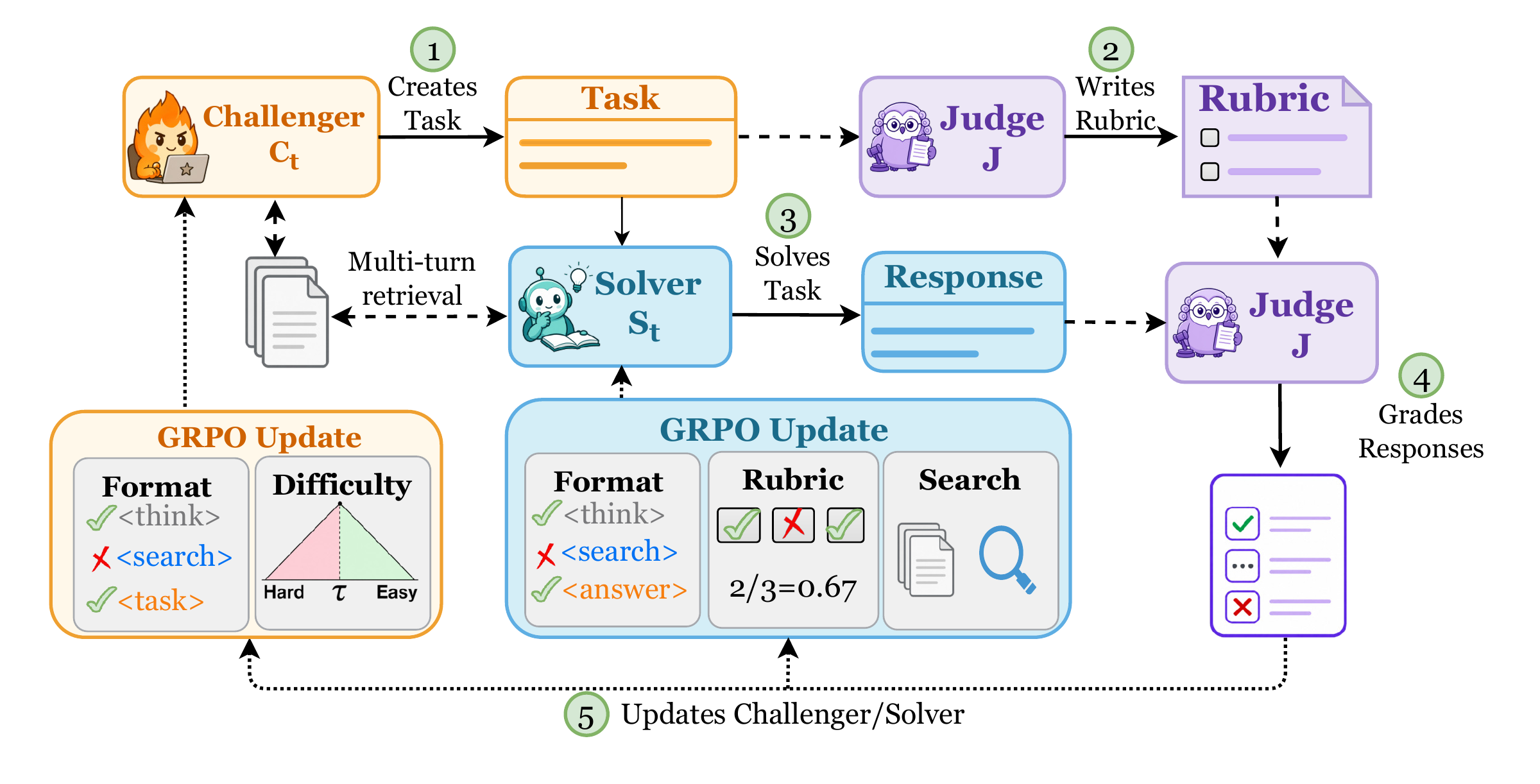
SCOPE updates both the Challenger and the Solver; the Judge stays fixed. It uses source documents, but does not need a curated set of training questions and answers.
Logit-Contribution Scoring Identifies Non-Literal Retrieval Heads, led by Aryo Gema, with Beatrice Alex. Main Track.
An attention head can read the right passage without contributing the right answer. This matters when retrieval requires an association or a paraphrase, rather than copying a token from the context. LOCOS scores what each head writes towards the answer through its output-value circuit, accounting for both attention and the information it carries. On Qwen3-8B, removing the 50 highest-scoring heads takes NoLiMa’s ROUGE-L score from 0.401 to 0.000; heads selected by a literal-retrieval baseline leave a score of 0.292. The selected heads also matter on downstream question answering, while parametric recall and arithmetic remain largely intact in the tested probes. See the project page for more details.
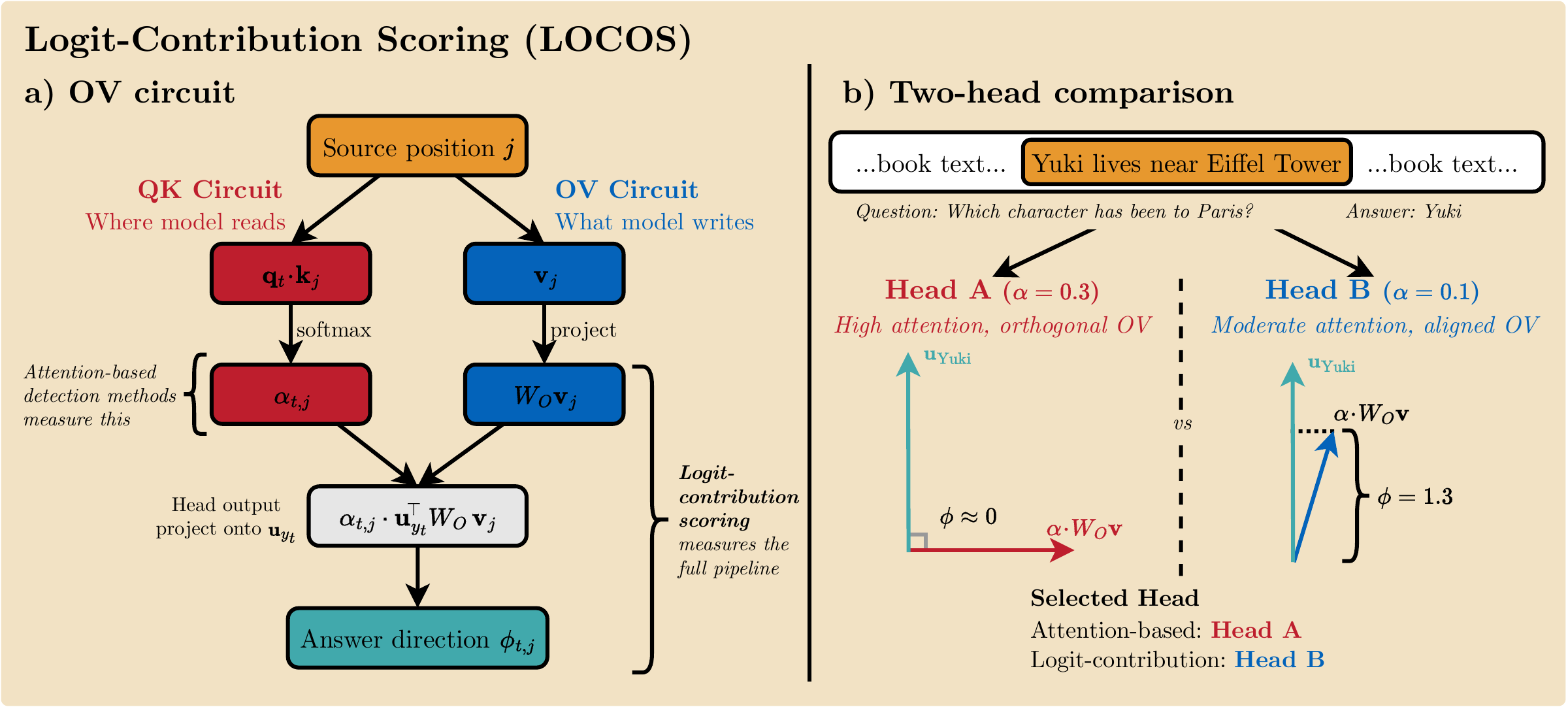
Two heads can attend to the same evidence but write very different information. LOCOS measures their contribution towards the answer, rather than attention strength alone.
NeurIPS 2026 - evaluating multimodal composition
Do Composed Image Retrieval Benchmarks Require Multimodal Composition?, led by Matteo Attimonelli, who visited us at the School of Informatics! Evaluations and Datasets Track.
Given a reference image and a textual edit, a retrieval model should find an image satisfying both. But how often does it actually need both inputs? Across four benchmarks and eleven embedding models, we find that 32.2% to 83.6% of queries admit a text-only or image-only shortcut under our top-10 retrieval test. Removing these shortcuts is only the first step: of 4,741 remaining queries that we validate with human annotators, only 1,689 are well-formed. Ambiguous edits and mismatched targets are common. Our validated subset, CIRCUS, gives a different picture of model performance and reliance on both modalities. A high retrieval score on the original benchmarks can substantially overstate multimodal composition.
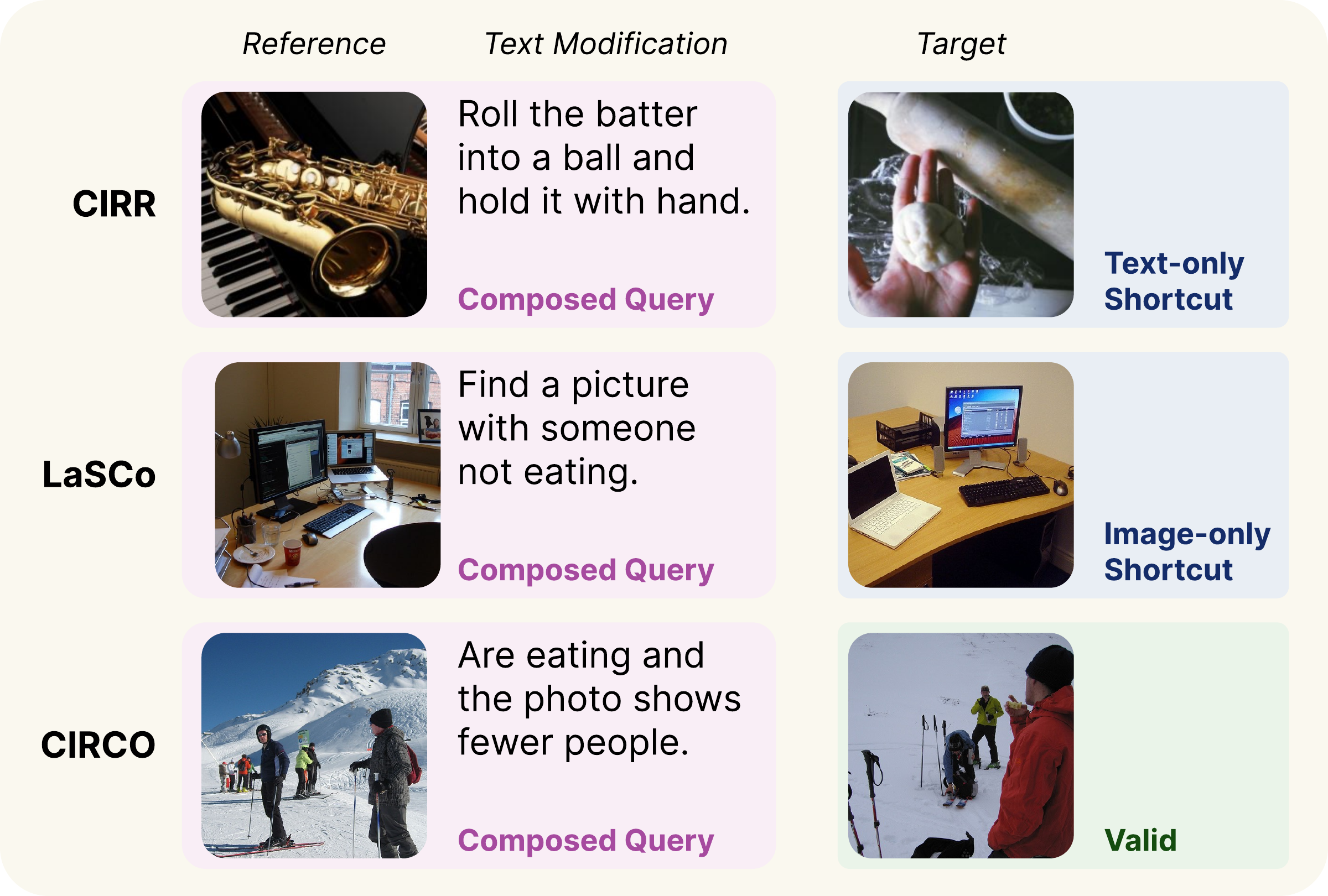
The first two queries can be solved with one input alone; the last requires the reference image and the edit together. Shortcut detection is relative to the tested models and retrieval cutoff.
NeurIPS 2026 - grounding behavioural evaluation
AI Behavioral Evaluation Should Be Grounded in Psychophysics Across Marr’s Levels, led by Jonas Leo Mueller and Dario Zanca. Position Paper Track.
How do robustness benchmarks, attention probes, and shortcut tests relate? We argue for studying them within AI psychophysics: systematically change an input and measure how the probability of a response changes. Marr’s levels distinguish the problem a system solves, the representations and processes it uses, and the physical implementation and its constraints. This distinction matters when interpreting evaluations: an attention map describes an internal computation, but a claim that those features cause a particular answer needs an intervention linking the two. We organise 21 evaluation paradigms within this framework and propose a common experimental protocol for making behavioural claims and their supporting evidence explicit.
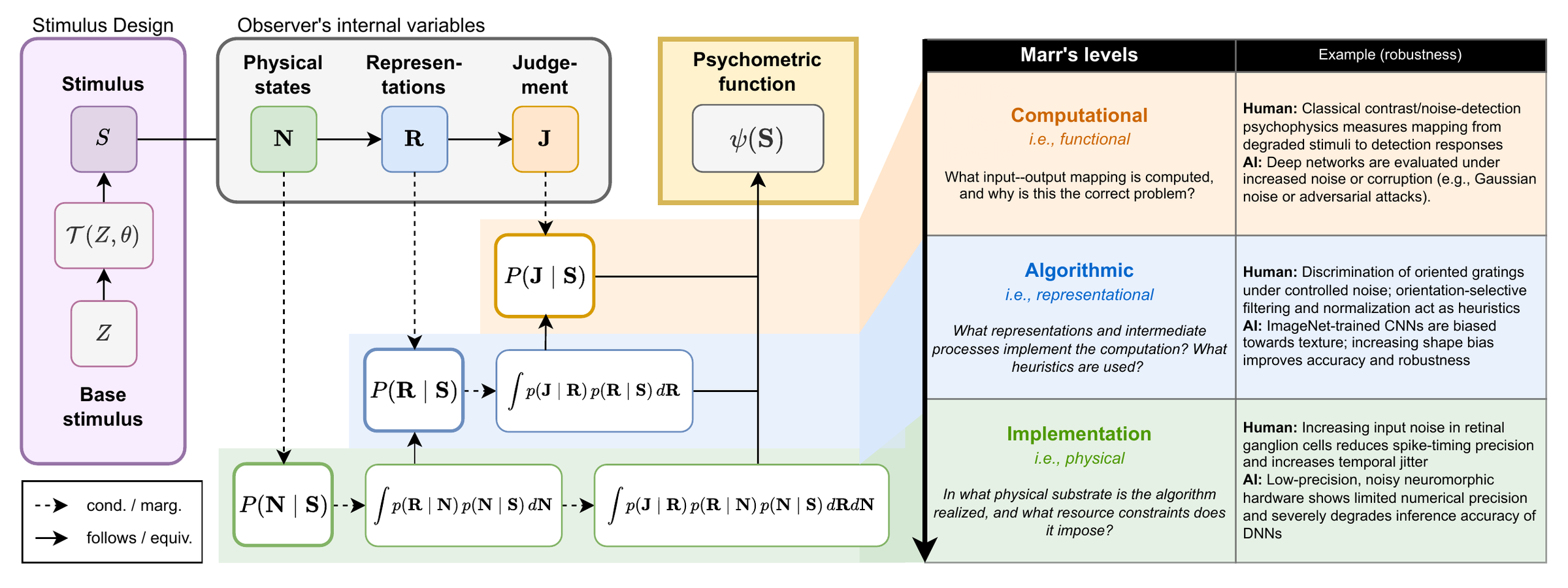
Controlled changes to an input produce measurable changes in responses. The three explanatory levels distinguish what the system computes, how it computes it, and how its physical implementation affects the result.
EMNLP 2026 - looking inside vision-language models
Can Retrieval Heads See Images? Multimodal Retrieval Heads in Long-Context Vision-Language Models, led by Aaron Branson Cigres Li. Main Conference.
Retrieval heads have mostly been studied in text-only models. How do we find them when the evidence is an image? We score attention from question tokens to relevant text or image regions, correcting for attention that is present even without an informative question. The selected heads are causally important: masking the union of heads detected across four retrieval tasks reduces Qwen3-VL-8B’s MMLongBench-Doc score from 48.2% to 5.7%, and SlideVQA from 71.2% to 8.9%. Their attention can also rank document pages without further training: on MMDocIR, selected-head scoring improves macro Recall@1 by 7.7 percentage points over the strongest reported page-retrieval baseline.
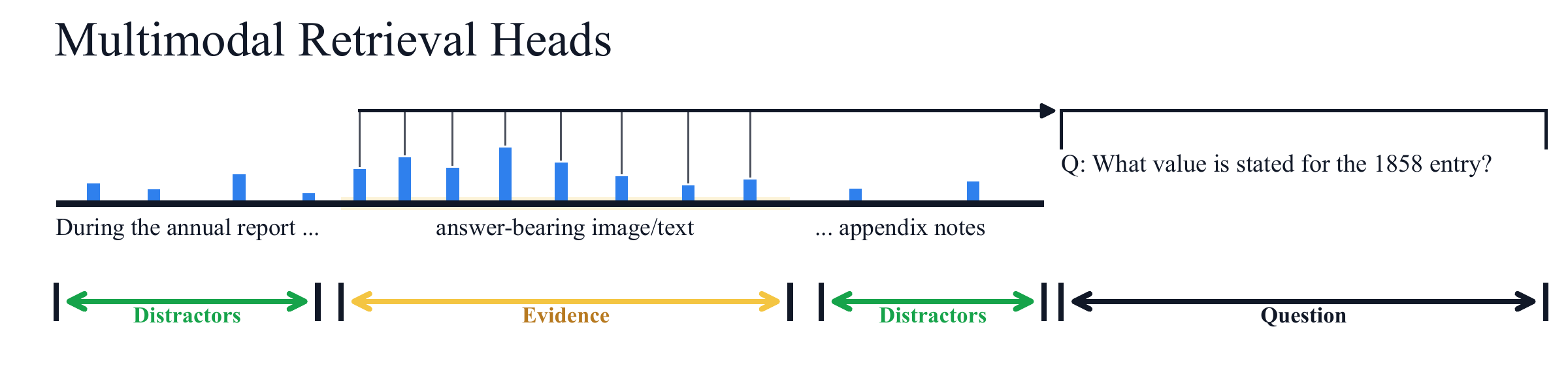
The evidence may be text or image tokens. Scoring the question’s attention to that evidence lets us identify retrieval heads in both modalities.
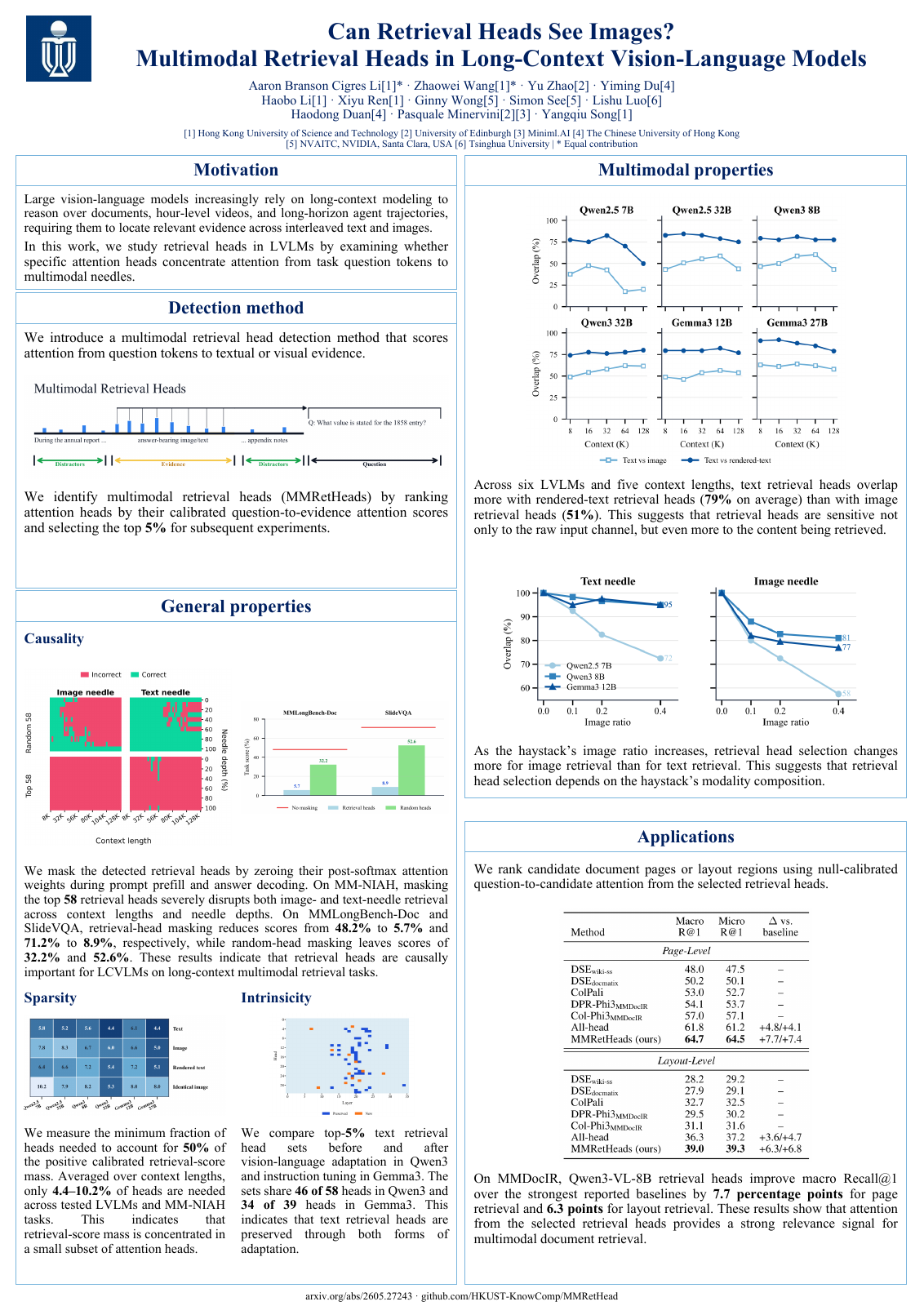
The conference poster, from Aaron’s website. Click the image to view it at full size.
Same Answer, Different Representations: Hidden Instability in VLMs, led by Farooq Ahmad Wani, with Alessandro Suglia and colleagues. Main Conference.
An unchanged answer can hide substantial movement in a model’s internal representations. We evaluate vision-language models using embedding drift, the spatial consistency of visual tokens, and sensitivity to different image-frequency bands, alongside ordinary accuracy. Image perturbations can leave the predicted label unchanged while substantially changing the representation; in the smallest model, some text-overlay effects approach the distances seen between unrelated images. Higher clean accuracy does not guarantee greater robustness either: on MMMU, Gemma-3’s answer-flip rate under text overlays increases from 20.2% at 4B to 31.8% at 12B. Looking only at final answers misses part of the response to corruption.
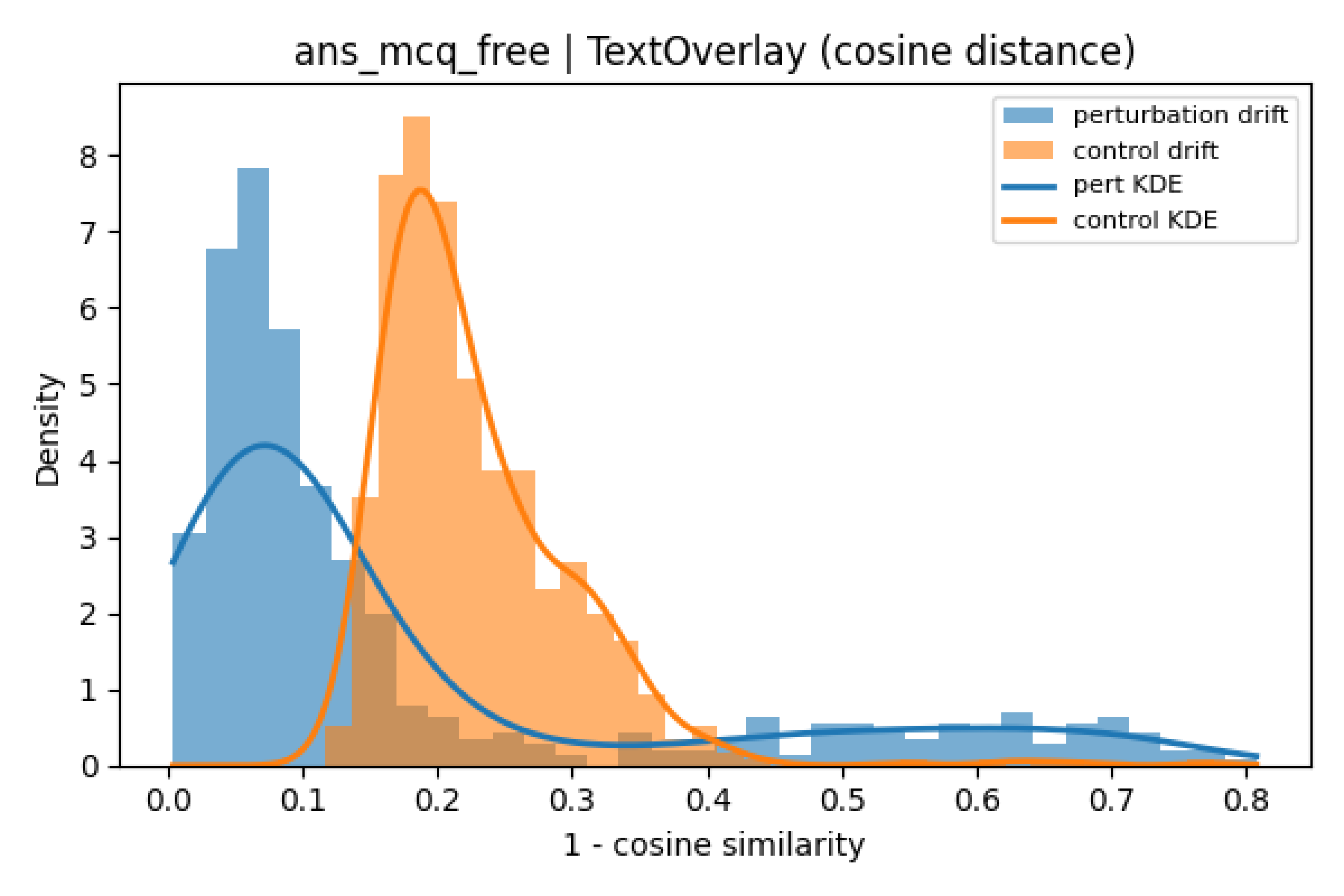
Text-overlay-induced answer-embedding drift (blue), compared with distances to unrelated images (orange). This particular probe uses freely generated answers, so it includes variation in wording as well as internal sensitivity.
EMNLP 2026 - composing steering vectors
Interference-Aware Composition of Steering Vectors, led by Giwon Hong.
Steering vectors can control individual behaviours, but adding several together can make them interfere or damage fluency. Giwon’s Interference-Aware Allocation uses the vectors’ interactions in output space to choose their relative weights, then adjusts the overall intervention strength at each generation step. We test combinations of a task behaviour with language and formatting constraints on Llama-3.1-8B-Instruct. In the Refusal setting without full behavioural instructions in the prompt, the average across five behaviour scores improves from 75.0 with static vector composition to 80.8, while judged fluency rises from 62.6 to 74.7. The goal is to control several behaviours without pushing the model into broken or repetitive outputs.
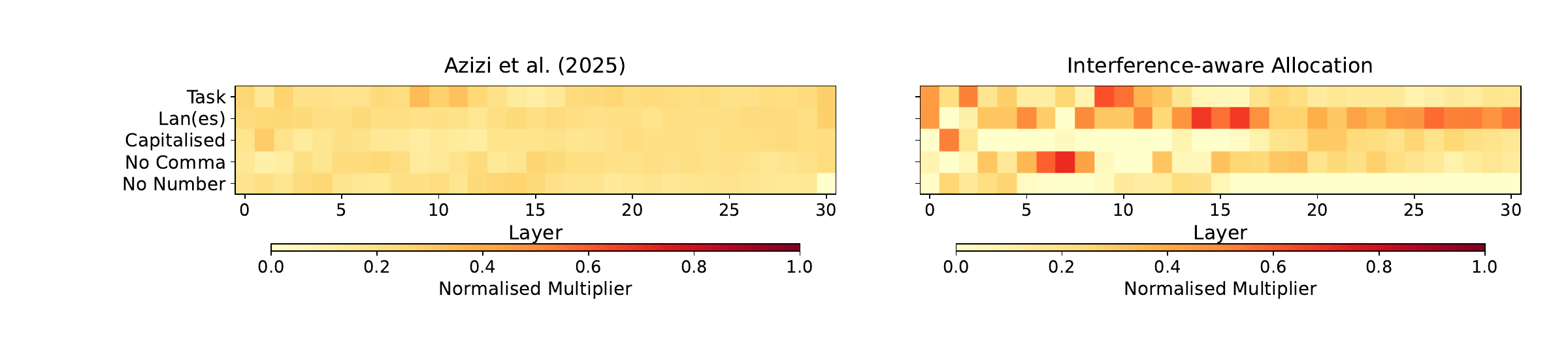
The relative contributions of the steering directions vary across layers. The plots show normalised multipliers in the Myopic-reward setting.
LoG - relational generalisation
Graph-to-Table Interfaces Control Relational Generalisation, led by Alessandro Cagiano, with Lorenzo Molfetta, Gianluca Moro, and Matteo Zignani.
Can we turn graph reasoning into a tabular prediction problem? We separate the encoder that turns graph evidence into feature rows, the selection of labelled examples, and the model that predicts from the resulting table. Matched experiments show that these choices interact. On CLUTRR, a positional representation fits short paths almost perfectly but generalises worse to longer paths than simple relation counts. On GraphLog, which representation works best depends on the decoder. Across 57 knowledge graphs, a TabPFN-3 readout of our full feature representation underperforms the original ULTRA graph model on 48 datasets. Preserving more graph detail does not by itself make an interface generalise better. Code and artefacts.
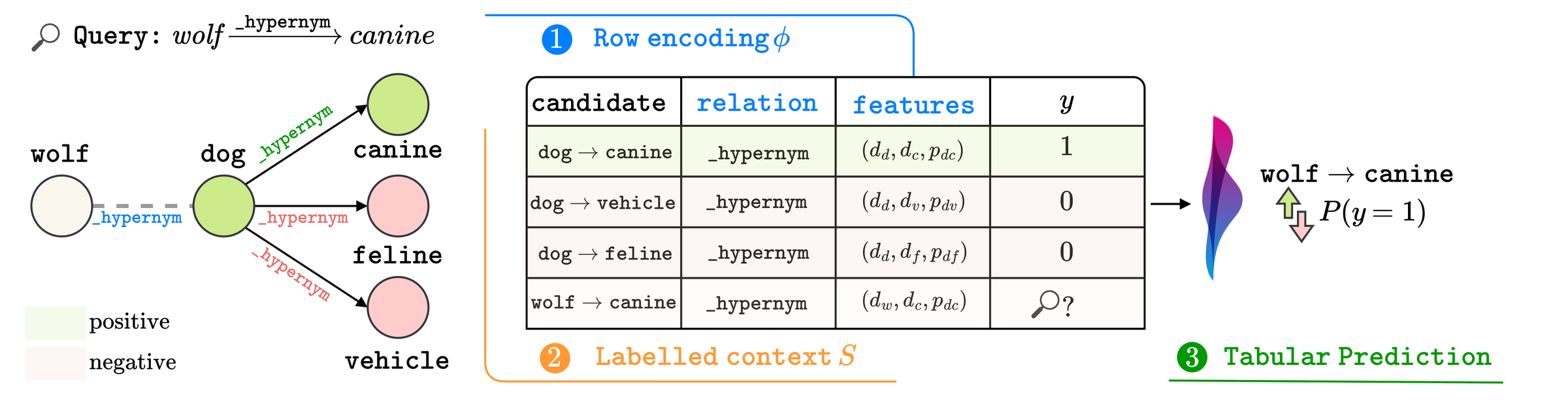
The graph-to-table interface has three parts: the feature encoder, the labelled context, and the decoder. Changing one can change our conclusions about another.
What’s brewing - recent preprints
Self-Play Search Distillation for Large Language Model Reasoning, led by Lorenzo Molfetta.
Can search-based game players teach a language model something useful beyond games? We train MuZero-family superhuman experts through self-play and use their search records to build reasoning examples about chosen moves, alternatives and their consequences, checked by replay under the game rules. Basically, self-play becomes an endless source of superhuman data to generate reasoning traces for LLM post-training. In our strongest setting, a language-model teacher uses these examples to guide the student’s own generated responses during training. The student receives no expert search traces or values at inference time. On Qwen3-4B-Base, the mean score over six mathematics benchmarks rises from 24.1 to 36.6, while held-out-game win rate rises from 15% to 45%, despite training only on the game-derived records.
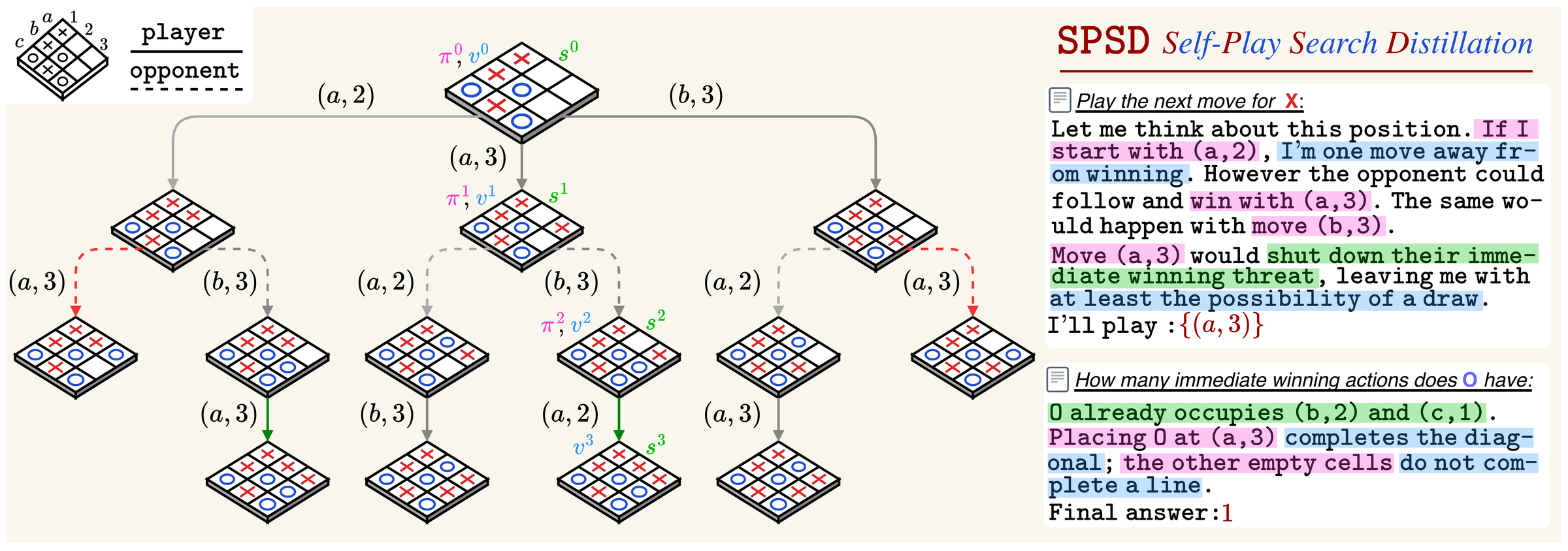
Self-play supplies the decisions and their alternatives; the game environment lets us check the resulting state transitions before using them as supervision.
Chain-of-Thought Faithfulness of Reasoning Models Varies with Where and How Preference Cues Are Delivered, led by Aryo Gema, with Neel Rajani and colleagues.
If a model follows a user’s preference, does its reasoning say that it did? FACE-Eval tests 15 open-weight models on 5,100 examples, varying whether preference cues arrive in the user message or a tool return, and whether they are explicit or embedded in a raw document. Every evaluated model is less likely to state its decision to follow a preference when the cue comes through a tool, or when it must infer the preference. Simply telling models that their reasoning will be monitored does not reliably close the gap. These are single-call tests with prefilled tool returns, rather than full agent runs. Code and data are available.
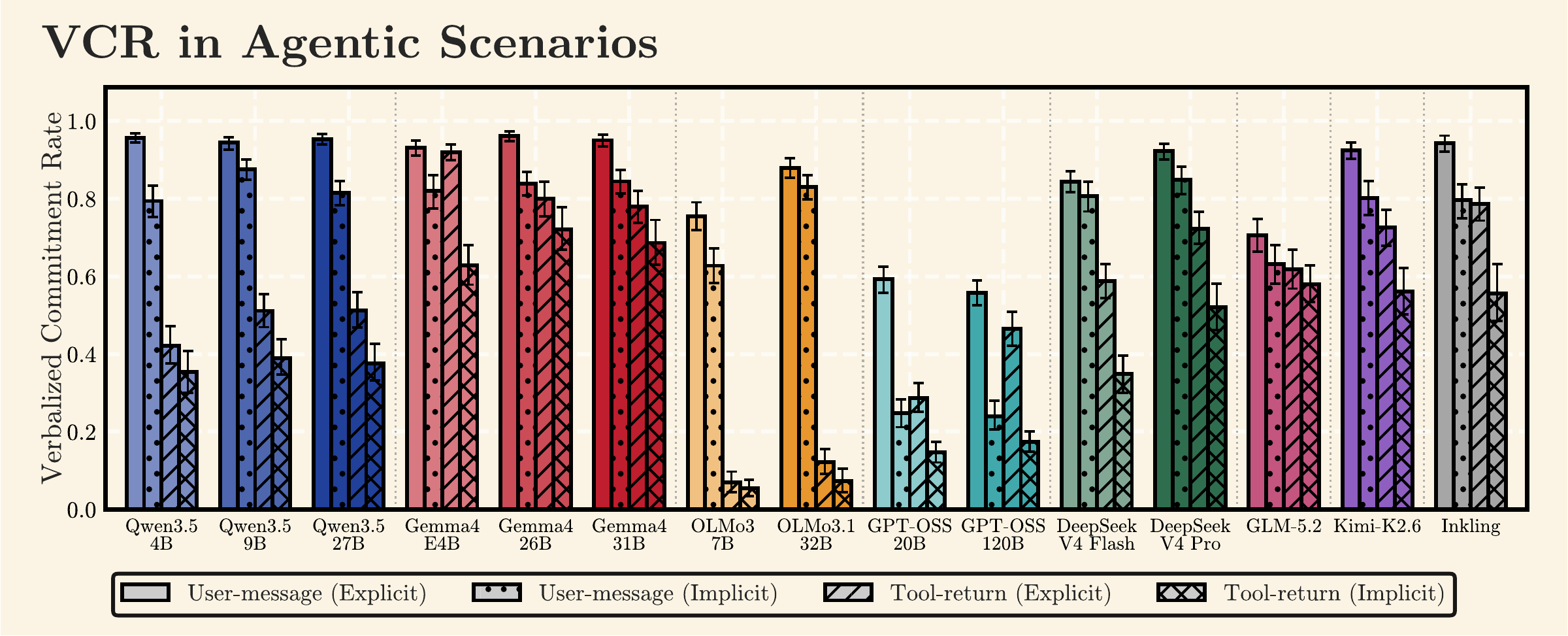
Among answers that follow the cue, the bars measure how often the reasoning explicitly records the decision to do so. Both the delivery channel and the explicitness of the cue matter.
Cross-Modal Attention Acts as a Frequency Filter: Why Verbose Prompts Improve Robustness in Vision-Language Models, led by Farooq Ahmad Wani and colleagues.
A small change in wording can make a vision-language model less sensitive to image corruption. We separate adding words from asking a more demanding visual question: verbose paraphrases can help, while questions requiring finer visual distinctions can hurt. We study this through the spatial frequencies emphasised by question-to-image attention. Across the tested GQA and CLEVR settings, verbose paraphrasing reduces the variance of perturbation-induced answer log-likelihood drift by 70-81% on the 8B models. This measures how sensitive the model’s answer probabilities are to corruption; the paper also reports accuracy gains separately.
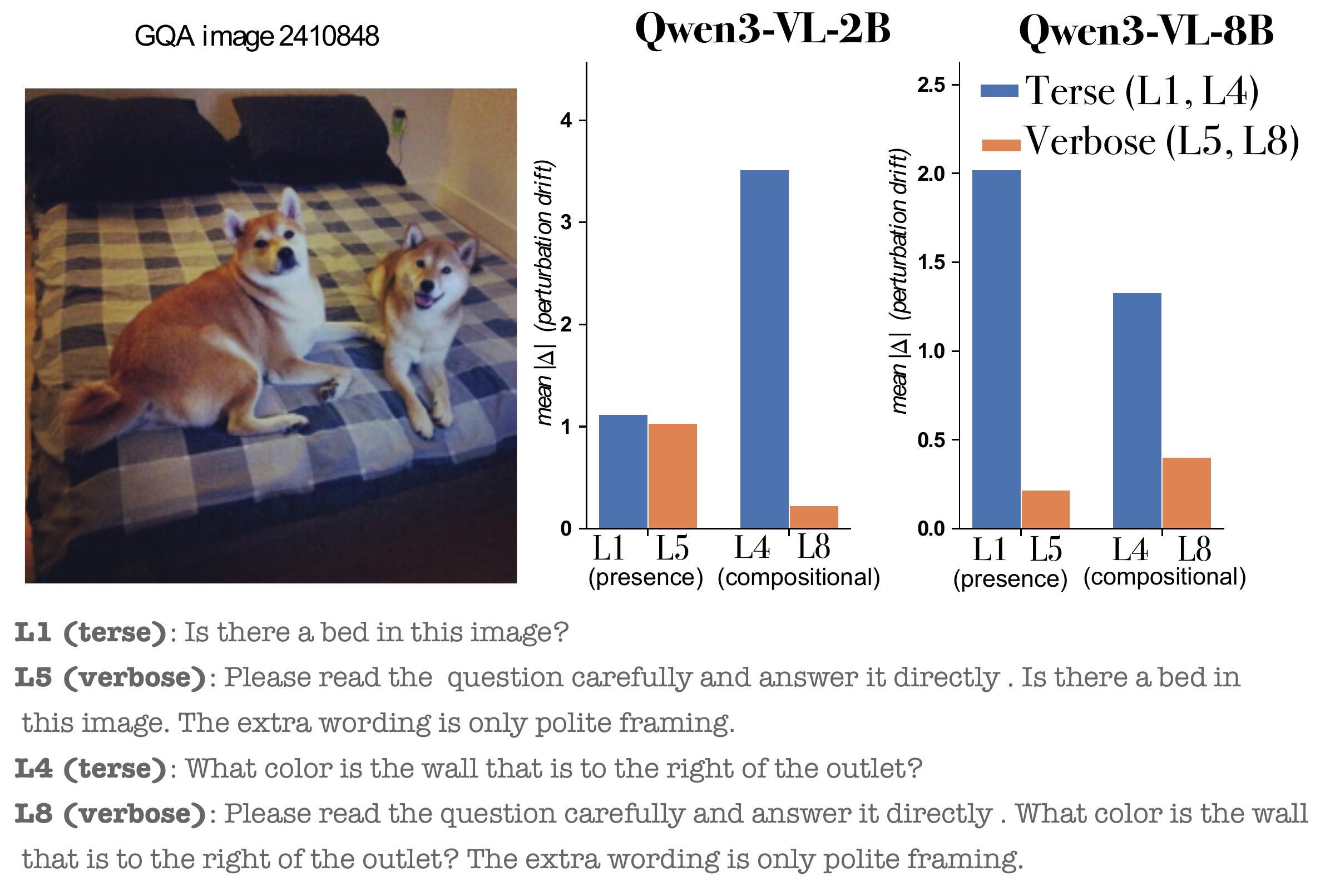
The image and underlying question stay fixed while the wording changes. Shorter bars mean a smaller average absolute change in the correct answer’s log-likelihood under image corruption.
Thanks to all the students and collaborators who led these projects! Click any figure for a larger version, and follow the paper links for the full experiments and limitations.
Cite this post
@misc{post-20261021-2026-emnlp-neurips-2026,
  author = {Pasquale Minervini},
  title = {{\{EMNLP, NeurIPS, LoG\} 2026}},
  year = {2026},
  month = oct,
  url = {https://neuralnoise.com/2026/emnlp-neurips-2026/},
  note = {Blog post}
}